RenoHouse

# Wine Cellar Installation Toronto: Complete 2026 Cost & Design Guide
Quick answer. Wine cellars in Toronto used to be a Forest Hill / Bridle Path / Rosedale specialty. In 2026 they are a mainstream basement upgrade across Oakville, Mississauga's Lorne Park, Vaughan's Kleinburg, and even mid-size condo penthouses where an under-stair pantry gets a glass front and a 1/4 HP cooling unit.Wine cellars in Toronto used to be a Forest Hill / Bridle Path / Rosedale specialty. In 2026 they are a mainstream basement upgrade across Oakville, Mississauga's Lorne Park, Vaughan's Kleinburg, and even mid-size condo penthouses where an under-stair pantry gets a glass front and a 1/4 HP cooling unit. The category is small but the dollar per project is high: a typical 300–500 bottle walk-in cellar in the GTA in 2026 sits at $22,000–$38,000 installed, and the luxury 1,000-bottle stone-and-glass builds we deliver in Mississauga and Oakville run $60,000–$95,000.
This pillar consolidates everything Toronto homeowners need to plan a wine cellar in 2026: the two main formats, realistic CAD pricing, cooling system choices, vapor barrier physics, racking, lighting, ROI, and the GTA permitting layer. If you are choosing between a refrigerated cabinet and a walk-in build, jump to walk-in vs glass-enclosed wine cellar Toronto. For a step-by-step basement build, see how to build wine cellar basement Toronto.
What "Wine Cellar Installation" Actually Means in 2026
Three configurations dominate the Toronto market right now:
- 1. Refrigerated cabinet. A free-standing or built-in cabinet from Eurocave, Sub-Zero, Wine Enthusiast Classic, or Vinotemp. 200–500 bottles, plug-and-play on a 120V/15A outlet. $4,500–$15,000 installed. No framing, no vapor barrier, no permits.
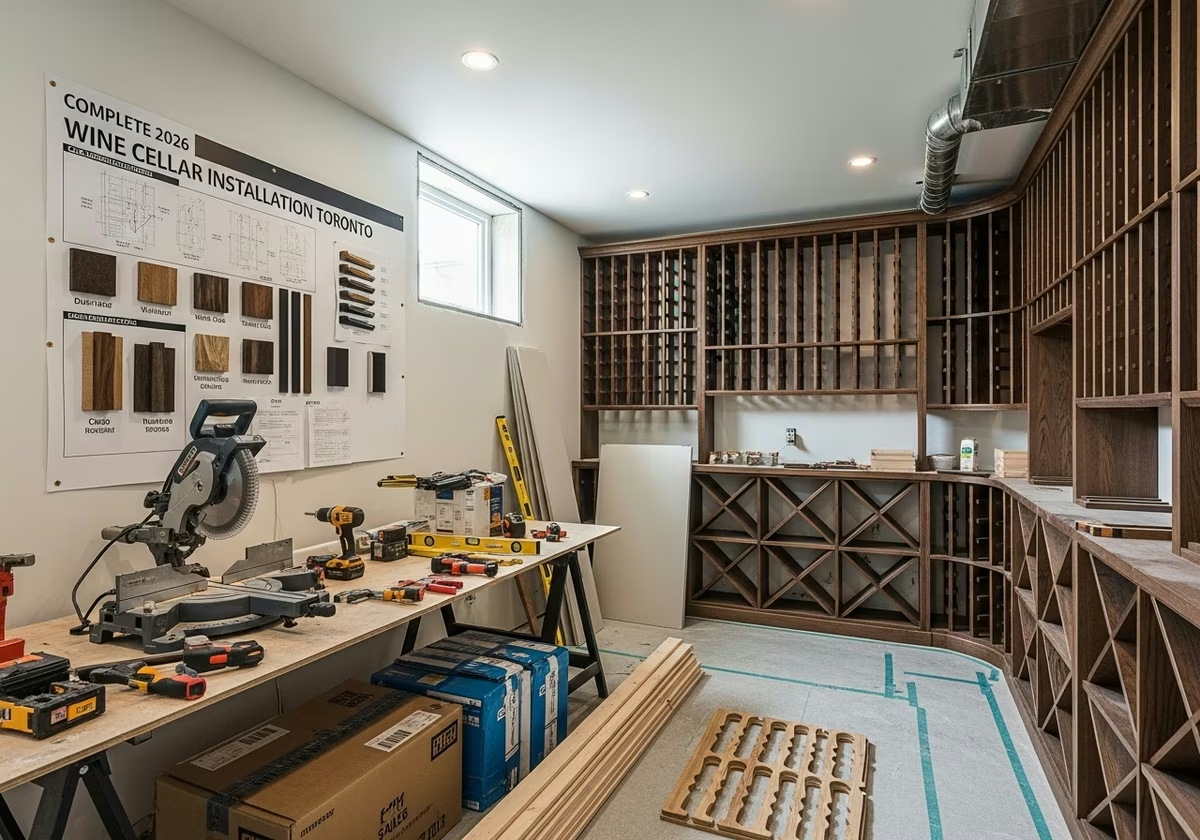
- 2. Walk-in cellar (closet or pantry conversion). A dedicated room — typically a basement closet, an under-stair void, or a former pantry — fully insulated to R-30+ with a continuous vapor barrier on the warm side, climate-controlled at 12.5 C / 55 F and 60–70% relative humidity, with wood or metal racking. $18,000–$38,000 for 250–500 bottles.
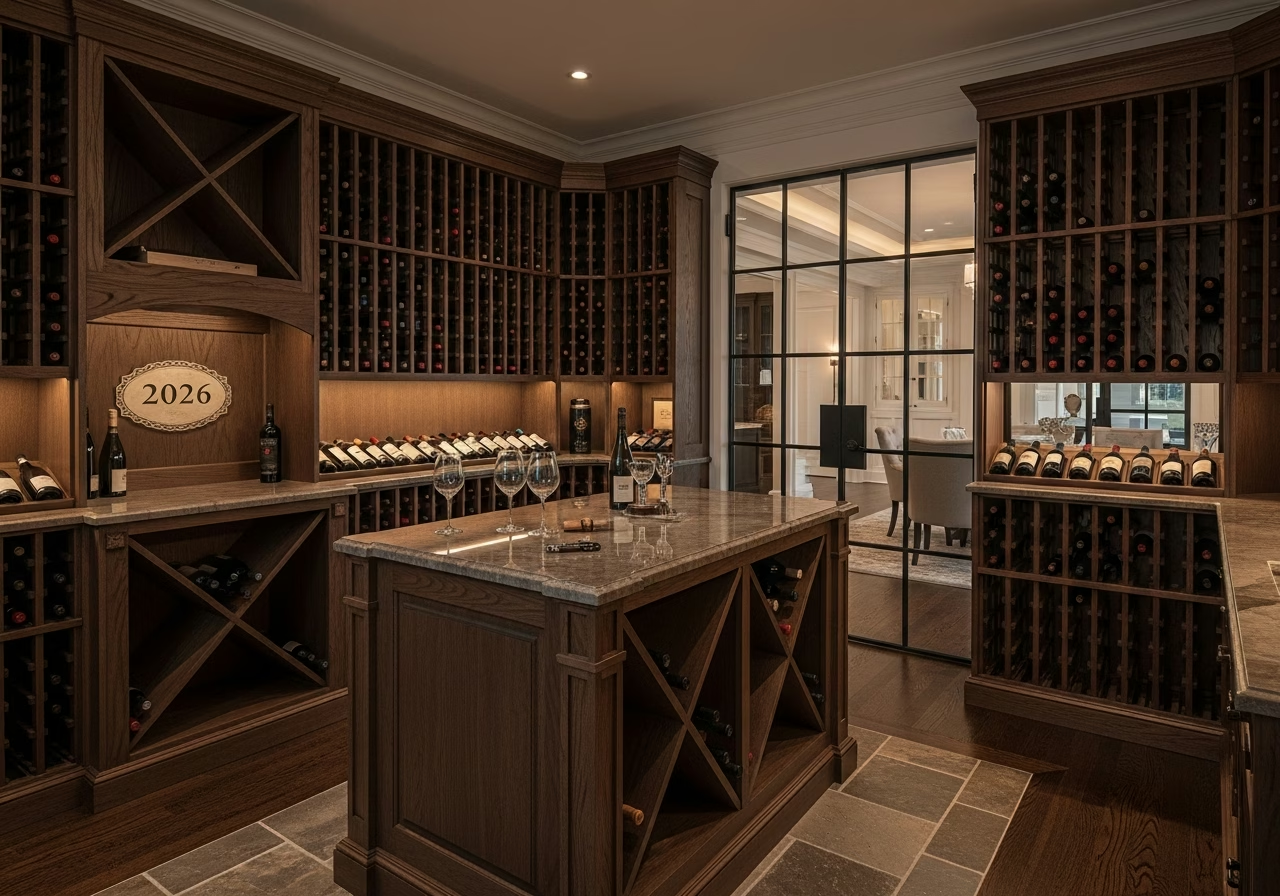
- 3. Custom luxury cellar. Stone or brick cladding, glass-enclosed wall systems, vault doors, sommelier table, designer lighting, integrated humidification, 1,000+ bottle capacity. $50,000–$120,000+.
The skill set behind a walk-in cellar is the same skill set behind a basement bathroom build (insulation + vapor barrier + finish carpentry) plus one specialty trade: the cooling system. Get the cooling and the vapor barrier right and the cellar lasts 30+ years. Get either wrong and the framing rots within 3 years.
2026 GTA Cost Breakdown
| Configuration | Capacity | Installed (CAD) |
|---|---|---|
| Refrigerated cabinet (Wine Enthusiast Classic) | 200–300 bottles | $4,500–$7,500 |
| Refrigerated cabinet (Eurocave / Sub-Zero) | 300–500 bottles | $9,000–$15,000 |
| Walk-in closet conversion | 250–500 bottles | $18,000–$30,000 |
| Walk-in custom build | 500–1,000 bottles | $30,000–$55,000 |
| Luxury walk-in (stone, vault door, glass) | 1,000–3,000 bottles | $60,000–$120,000+ |
The line items that move price the most:
- Cooling system. A through-wall split-ductless from CellarPro or Wine Guardian runs $3,500–$8,500 supplied; a self-contained through-wall unit (WhisperKool Platinum) runs $1,800–$3,500. Compare full systems in wine cellar cooling systems comparison.
- Insulation and vapor barrier. R-30 closed-cell spray foam in walls + ceiling + 6 mil poly on the warm side: $4,500–$9,000 for a typical 8x10 cellar. Detail in wine cellar vapor barrier insulation.
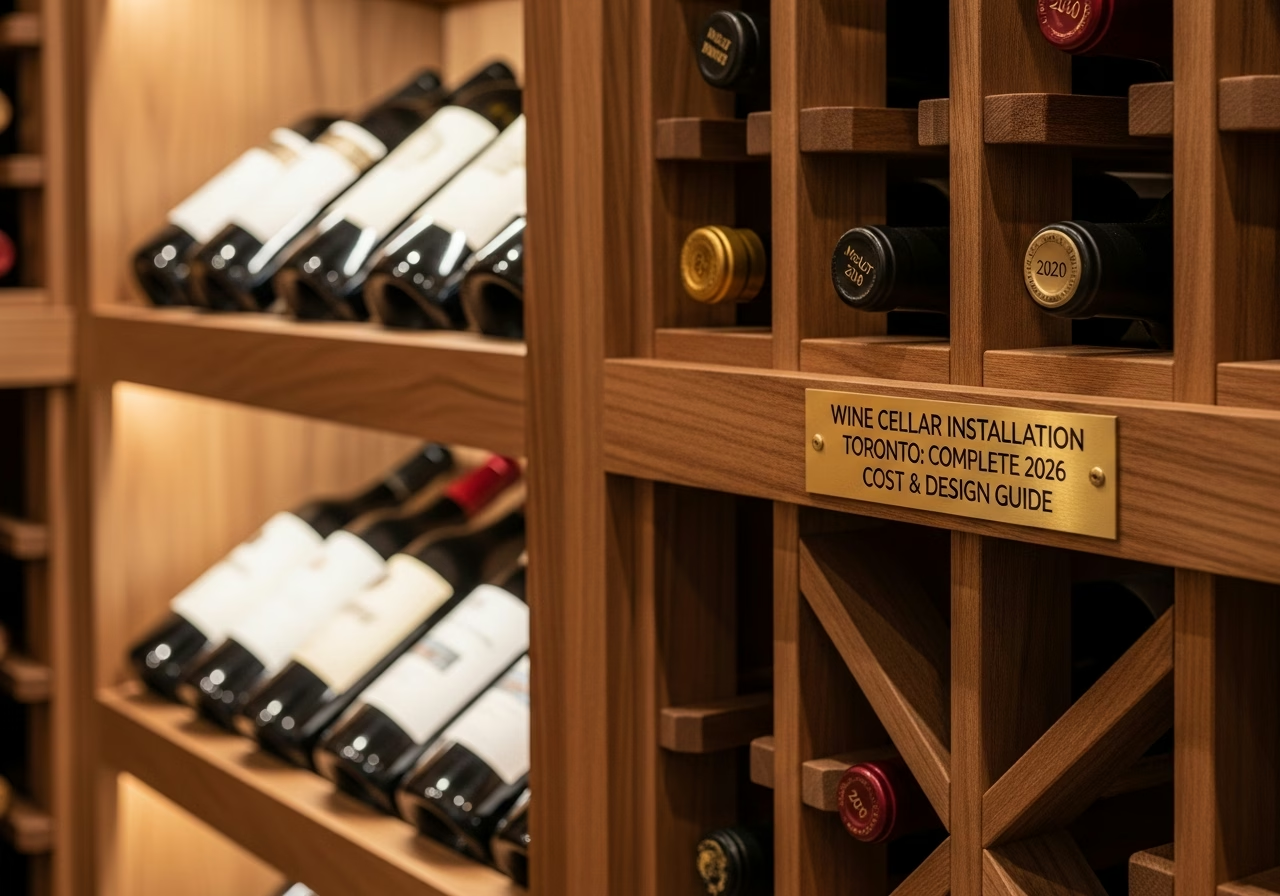
- Racking. Standard pine racks: $35–$60/bottle of capacity. Mahogany or sapele: $90–$140/bottle. Vintage View metal label-forward: $25–$45/bottle. Acrylic display: $80–$160/bottle. See wine cellar racking systems guide.
- Door. A solid insulated wine room door with seal and threshold runs $1,200–$2,500. A glass-front door with thermally broken frame runs $3,500–$7,500.
- Flooring. Stone tile over Schluter Ditra: $18–$35/sf installed. Engineered hardwood acclimated to 60–70% RH: $14–$22/sf.
- Lighting and humidification. UV-free LED system $400–$1,200; ultrasonic humidifier $250–$700. See wine cellar lighting temperature humidity.
For a side-by-side budget vs premium comparison, see wine cellar cost Toronto comparison.
Where Toronto Homeowners Are Putting Wine Cellars
| Location | % of GTA Installs (2026) | Notes |
|---|---|---|
| Basement under-stair void | ~30% | Naturally cool, great for 250–500 bottles |
| Basement dedicated room | ~35% | Most common 500+ bottle build |
| Main floor pantry conversion | ~12% | Forest Hill, Lawrence Park favorite |
| Glass-enclosed feature wall (living/dining) | ~15% | Show-piece, condo penthouses |
| Garage (insulated, conditioned) | ~5% | Larger collectors |
| Outdoor cabin | ~3% | Cottage market |
The under-stair build is dominant in Toronto's narrow-lot semi-detached and townhouse market. Forest Hill and Bridle Path projects are typically dedicated rooms; condos go for the glass feature wall. Detail on the feature-wall format in glass-enclosed wine cellar living room Toronto.
Toronto Climate: Why Vapor Barrier Is Non-Negotiable
Toronto is a humid-continental climate. Outside the cellar in summer the basement air sits at 22–25 C and 55–65% RH. Inside the cellar we hold 12.5 C and 65% RH. That temperature differential drives moisture into the cellar wall assembly continuously through summer. Without a continuous vapor barrier on the warm side (outside) of the insulation, condensation forms on the cool side of the assembly, soaks the framing, and within 24–36 months you have black mold behind the racking.
This is the single most common reason a wine cellar fails in Toronto. The fix is straightforward and inexpensive at build time, and it is what separates a renovator who has done two cellars from a renovator who has done thirty. We unpack the assembly stack in wine cellar vapor barrier insulation.
Cooling System Selection
The cooling unit is the single most important spec decision. The four categories Toronto installers use in 2026:
- 1. Self-contained through-wall (WhisperKool, Wine Guardian SS). $1,800–$4,500. Easiest install, vents into an adjacent unconditioned space (typically a utility room). 200–800 bottle capacity range. Good for 60% of GTA installs.
- 2. Ducted split (CellarPro, Wine Guardian D-series, Wine Guardian DS). $5,500–$10,500. Compressor outside the cellar (basement utility room, garage, or outdoor pad), evaporator inside. Quiet, scalable, premium choice. 500–3,000 bottle capacity.
- 3. Ductless split. $6,500–$12,500. Mini-split style, indoor evaporator head visible. Less common in residential cellars because it intrudes visually.
- 4. Whole-room HVAC tie-in. $8,500–$18,000. Custom ducting from the home's HVAC, with a dedicated zone control. Used in luxury builds where the cooling unit must be invisible.
Brands we install most often: Wine Guardian (Toronto distribution via Aircool), CellarPro (premium choice), WhisperKool (entry through mid-tier), BarrelWorks (Canadian brand, mid-tier). Full comparison in wine cellar cooling systems comparison and brand pros/cons in best wine cellar brands 2026 Toronto.
Permits, Codes, and Toronto Building Department
Capacity Planning: How Many Bottles Do You Actually Need?
Toronto buyer behavior we see in 2026:
Need professional home renovation?
Call RenoHouse at 289-212-2345 or get a free estimate today.
Get Free Estimate →- Casual collector (50–150 bottles). Cabinet unit. Eurocave Comfort or Sub-Zero 30" undercounter. Lives in a kitchen island or pantry.
- Active collector (200–500 bottles). Walk-in closet conversion. Most common 2026 GTA install.
- Serious collector (500–1,200 bottles). Dedicated room. Often combined with a tasting nook.
- Investor / sommelier collector (1,500+). Custom luxury build. Stone, glass, vault door.
Build the cellar 30–40% larger than your current collection. Capacity creep is universal. Detail in wine cellar capacity 50 vs 3000 bottles.
Racking Choices
Four racking systems compete in 2026:
- Traditional individual-bottle wood racks (pine, mahogany, sapele). Classic look. $35–$140/bottle of capacity.
- Vintage View metal label-forward. Bottles displayed label-out. Modern. $25–$50/bottle.
- Acrylic display panels. Minimal, premium. $80–$160/bottle.
- Custom millwork (drawer + display hybrid). Full-budget builds. $150–$300/bottle.
Most Toronto walk-in cellars in 2026 mix two systems: bulk wood racking for the working collection plus a label-forward feature wall for display bottles. Full breakdown in wine cellar racking systems guide.
ROI and Resale Impact in 2026
A permitted, professionally built wine cellar adds resale value in two distinct ways:
- 1. Direct value-add. Toronto appraisers in 2026 attribute roughly 40–70% cost recovery on a properly built walk-in cellar in homes priced $1.6M+. The recovery rate climbs in Forest Hill, Bridle Path, Rosedale, and Lawrence Park where wine cellars are an expected luxury feature.
- 2. Time-on-market reduction. Listings featuring a glass-enclosed wine cellar in a living or dining space spend 18–28% less time on market in Old Oakville, Forest Hill, and Mississauga's Lorne Park, per local agent feedback.
Cabinet units do not move the appraisal needle. Walk-in cellars do, particularly when they are visible from a primary entertaining space. Glass-enclosed feature walls in living rooms produce the strongest resale signal of all configurations. Full ROI analysis in wine cellar ROI Toronto home value.
Common Mistakes Toronto Installers See
- 1. No vapor barrier or vapor barrier on the wrong side. Mold behind the racking within 3 years.
- 2. Cooling unit undersized. A WhisperKool Platinum 4000 in a poorly insulated 600-bottle room. Runs constantly, fails early.
- 3. Ducted exhaust into a small unconditioned space. Heat rejection has nowhere to go; ambient temp around the unit climbs to 35 C and the unit cannot dump heat.
- 4. Hardwood floor without humidity acclimation. Cups within 6 months.
- 5. No condensate drain plan. Pan overflows; mold on the floor.
- 6. Cabinet unit installed flush in tight cabinetry without ventilation gap. Compressor overheats; warranty void.
- 7. Door without seal and sweep. 25–35% energy waste, inability to hold humidity.
Full mistakes list in wine cellar installation mistakes to avoid.
DIY vs Professional
A handy homeowner with renovation experience can frame and finish a wine cellar. The two parts that should not be DIY:
- Cooling unit selection and install. Sizing, refrigerant lines (if split), condensate management, electrical.
- Vapor barrier detailing. This is what separates a 30-year cellar from a 3-year cellar.
Most Toronto DIYs that succeed use a hybrid model: homeowner does framing, drywall, and racking install; pro does insulation/vapor barrier and cooling. Full breakdown in DIY vs professional wine cellar Toronto.
Process: Concept to First Bottle
| Phase | Duration | What Happens |
|---|---|---|
| Site visit + design | 1–2 weeks | Layout, capacity, cooling spec, finishes |
| Permits (ESA, building) | 1–3 weeks | Filed and approved |
| Demo + framing | 3–7 days | New partition walls, headers |
| Insulation + vapor barrier | 2–4 days | Closed-cell foam + 6 mil poly |
| Drywall + paint | 4–7 days | Mold-resistant board, primer + topcoat |
| Cooling install | 1–2 days | Through-wall or split |
| Door | 1 day | Hung and sealed |
| Flooring | 2–4 days | Stone or engineered |
| Racking | 2–4 days | Assembled and anchored |
| Lighting + humidification | 1 day | UV-free LED, humidifier |
| Commissioning | 3–7 days | Stabilize at 12.5 C and 65% RH |
| Total walk-in build | 5–9 weeks | |
| Cabinet install | 1 day |
Wellness Suite Cross-Linking
Wine cellars sit in the same "luxury basement" budget category as the wellness suites we build. Many Toronto clients in 2026 plan a sequential basement: wine cellar phase 1, basement sauna installation phase 2, cold plunge installation phase 3. The shared infrastructure (electrical service upgrade, drainage, HVAC zoning) is roughed in once and used three times.
FAQ
What temperature should a Toronto wine cellar hold?12.5 C / 55 F, plus or minus 1 C, year-round. Humidity 60–70%.
How loud is the cooling unit?Self-contained through-wall units are 50–58 dB at 1 m — about as loud as a dishwasher. Ducted splits with the compressor remote-mounted are nearly inaudible inside the cellar.
Will my hydro bill spike?A typical 500-bottle cellar with a Wine Guardian self-contained unit costs $25–$50/month to run at Toronto Hydro 2026 rates. Larger luxury cellars with ducted splits run $60–$120/month.
Can I build a wine cellar in a Toronto condo?Yes — the under-stair pantry or den-corner glass-enclosed format is common. The condo board needs to approve the cooling unit's heat rejection plan. A self-contained unit venting into the unit's ventilated utility closet is the typical solution.
Do I need a permit for a cabinet wine cellar?No building permit. ESA filing is not required if the cabinet plugs into an existing 120V outlet. If you add a dedicated circuit, ESA filing is required.
How long do wine cellar cooling units last?Self-contained units: 8–14 years. Ducted splits with the compressor in a clean, ventilated mechanical room: 15–22 years. The first compressor often outlasts the homeowner.
Should I use spray foam or batt insulation?Closed-cell spray foam, R-6 per inch, with a continuous integrated vapor retarder. Faster, better performing, no air leakage, no settling. Batt insulation in a cellar is a known failure mode.
Glass-enclosed cellar — can it really hold the right humidity?Yes, with a thermally broken frame, double-pane low-E glass, and a properly sized cooling unit. The cellar runs slightly drier (55–60% RH) but well within range. Detail in glass-enclosed wine cellar living room Toronto.
---
Planning a wine cellar in your Toronto, Mississauga, Oakville, Vaughan, or Forest Hill home? RenoHouse handles design, permits, framing, vapor barrier, cooling, racking, and finishes end-to-end. We work with Wine Guardian, CellarPro, WhisperKool, BarrelWorks, Eurocave, Vinotemp, and custom millwork suppliers. Book a free consultation on our wine cellar installation service page.
Sources & References
Authoritative sources cited in this guide:
- Ontario Building Code — OBC official text
- Toronto Building Permits — City permit portal
- Tarion New Home Warranty — Ontario new-build warranty regulator
- HCRA — Home Construction Regulatory Authority — Ontario builder/vendor licensing
Continue Reading
- Wine Cellar Cost in Toronto: 2026 Budget vs Premium Comparison
- Wine Cellar Capacity Planning: 50 vs 500 vs 3,000 Bottles (Toronto 2026)
- How to Build a Wine Cellar in a Toronto Basement (2026 Step-by-Step)